
If you’ve only ever used your meat grinder for burgers, you are missing out on its best feature: making homemade sausage.
Many beginners are intimidated by the process, stuffing casings, getting the right fat ratio, and keeping the texture from turning crumbly. But once you understand the technique, it is surprisingly easy. The secret isn’t just the recipe; it’s how you handle the meat before it hits the auger.
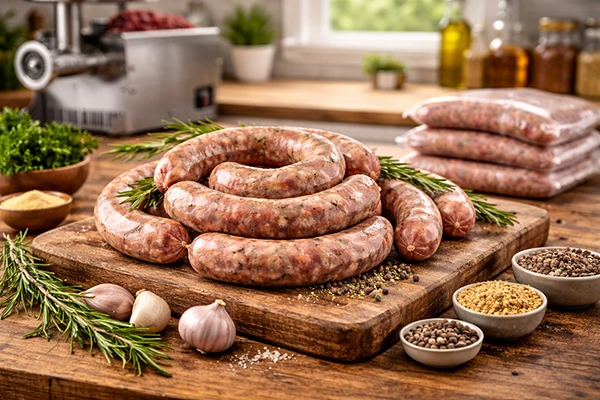
This guide walks through the process for a good ‘snap’ and juicy texture, along with classic recipes adapted from the experts.
The Golden Rules of Grinding Sausage
Rule #1: Temperature is King The biggest mistake beginners make is letting the meat get warm. If the fat melts during grinding (called ‘smearing’), your sausage will be dry and crumbly.
- The Fix: Cut your meat and fat into cubes, then put them in the freezer for 45 minutes before grinding.
- Pro Tip: Put your grinder head, auger, and tray in the freezer too. Cold metal keeps the fat solid.
Rule #2: The Sticky Test (Protein Extraction) After grinding and adding spices, you must mix the meat until it becomes sticky. This develops a protein called myosin, which acts like glue.
- The Test: Grab a handful of the meat mixture and turn your hand upside down. If the meat sticks to your palm and doesn’t fall for 5 seconds, it’s ready to stuff. If it falls, keep mixing.
Rule #3: Don’t Overstuff When filling casings, leave a little slack. If the sausage is bursting at the seams, it will likely split when you twist it into links or cook it.
Main Ingredients
In addition to your ground meat of choice, salt, seasonings, fat, and a liquid of choice to help bind the mixture together constitutes sausage meat. If you don’t use a liquid for binding, you will be left with plain hamburger meat, albeit it will be well-flavored. It can be as simple as wine or beer, juice, water, or even cream… they all work well to bind together the other ingredients. Some folk like to use the bound sausage meat without going to the trouble of stuffing casings and creating traditional links of sausages, but it is all about personal choice.
Beef, pork, lamb and game are generally considered the best meats to use.
A Hint about Fat
Sausage enthusiasts will no doubt agree that a low-fat sausage is not a good one when it comes to taste. A minimum of 20% ratio to meat is required; some prefer a sausage with up to 50% fat. 20% to 30% is the accepted ratio for making a good sausage. You can buy fat separately from your butcher and add it to the meat or purchase meat with the fat attached. Too much fat is equally bad as not enough, and the same can be said for salt and other flavorings. A good sausage mixture should have a balance between all the ingredients you decide to use without one overpowering another.
Equipment
You will need the following:
- Meat grinder with a choice of grinds
- Scales to ensure correct weight ratios of ingredients
- Sausage stuffing machine (only if you are going to make large quantities on a regular basis) otherwise the attachment that comes with your meat grinder will do fine
- Sausage casings
- Wooden rack for hanging sausage links
Work with Cold Ingredients
The best way to do this is to put everything in the freezer for a few hours, including the equipment. The meat should not be frozen, but the fat can be. It would be best to ensure this part of the process is done before proceeding. Have plenty of ice cubes on hand, too, to keep the meat and fat cold while working with it. While the meat is chilling, you can also cut up seasonings such as garlic.
RECIPES
These classic recipes come from Hank Shaw at honest-food.net. Shaw is an authority on wild game and cured meats, and his ratios work well on the standard electric grinders most home cooks use.
Classic Italian Sausage
This recipe comes courtesy of Hank Shaw at Honest-Food.net. It’s his Sweet Italian sausage, and it’s a good first recipe because pork shoulder already has close to the right fat ratio.
The Grinder Setup
- Plate Used: Coarse (8mm or 10mm).
- Meat Choice: 4 lbs Pork Shoulder (Butt) with about 1 lb of fatback.
- Difficulty: Beginner.
Grinding Tips for This Recipe
Pork shoulder is relatively soft, but it has connective tissue that can clog smaller grinders.
- The Grind: Chill the meat and fat until they’re firm at the edges. Semi-frozen fat cuts cleanly instead of smearing, and a #12 grinder like the LEM .75HP moves through shoulder quickly.
- The Texture: The coarse plate gives a rustic, butcher-shop texture. For a smoother hot-dog style, grind it twice, but for Italian sausage a single coarse grind is traditional.
- Flavor Note: Fennel is the signature flavor. If you like that licorice note in a pasta sauce, an extra teaspoon of fennel seed is an easy tweak.
The Recipe
(Ingredients courtesy of Honest-Food.net)
- 4 pounds pork shoulder
- 1 pound pork fat
- 36 grams kosher salt
- 35 grams sugar
- 20 grams fennel seeds (toasted)
- 6 grams cracked black pepper
- 4 grams nutmeg
- 1 cup ice-cold white wine
- Hog casings (soaked for at least an hour)
Instructions:
- Cube the meat and fat, toss with salt and sugar, and freeze for 1 hour.
- Grind the meat and fat through the coarse plate.
- Add spices and wine. Mix by hand (or a stand mixer on low) until the meat passes the “Sticky Test” mentioned above.
- Stuff into casings, link, and let them dry in the fridge overnight before freezing or cooking.
Variation: Spicy Wild Game Sausage
If you are a hunter or just want to try something leaner, you can adapt the method above for venison or elk.
- The Challenge: Game meat is very lean. If you grind it straight, it will be dry.
- The Fix: You must cut the wild game with at least 30% pork fat. Do not skip this step!
- Grinder Note: Game meat often has more silver skin. Ensure your grinder knife is sharp, or the silver skin will wrap around the auger and jam the machine.
Why Did My Sausage Fail?
| Problem | Likely Cause | The Fix |
| Texture is dry/crumbly | Smearing | Your meat was too warm. Freeze it longer next time. |
| Casing is tough | Improper soaking | Soak natural casings in warm water for at least 1 hour. |
| Sausage burst in pan | High heat | Cook “low and slow.” Do not boil them; poach gently. |
Final Thoughts
Making sausage at home gives you complete control over what goes into your food: no mystery fillers, just quality meat and spices.
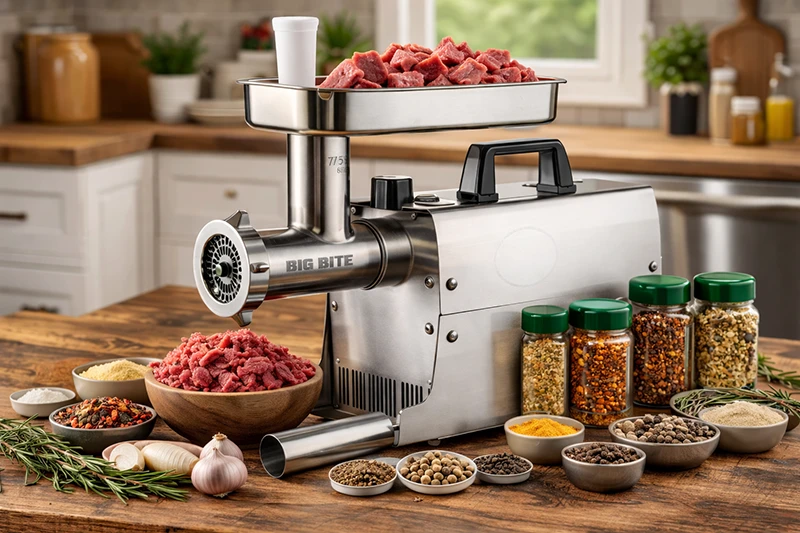
If you are looking to upgrade your setup to handle larger batches, see our review of the LEM .75hp Big Bite Grinder.
Have you tried making this recipe? Let me know in the comments how your grinder handled the pork shoulder!